
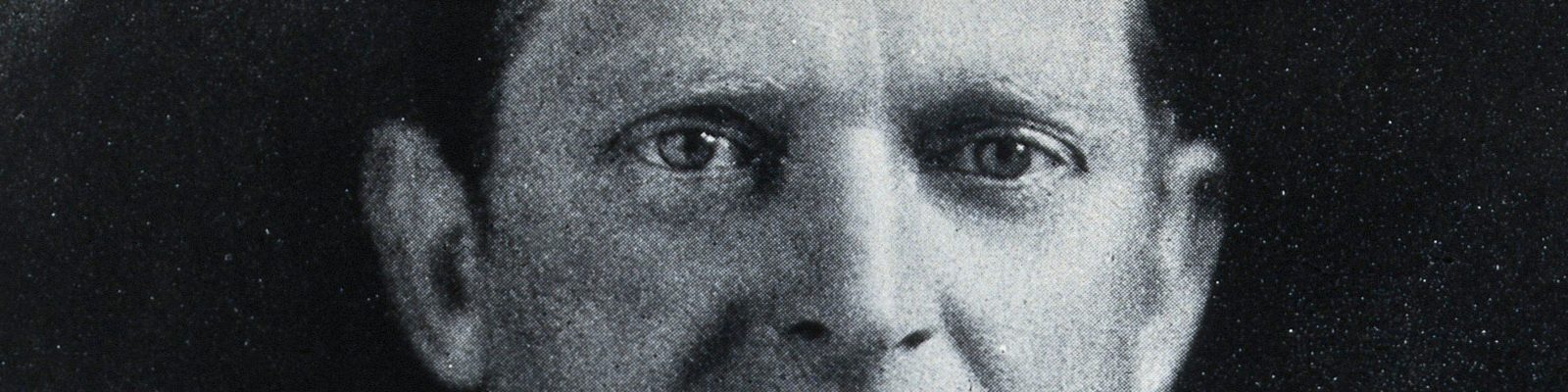
Zinsser, Lice and History
Lice and Disease
From Progress, The Newsletter of the National Pediculosis Association® By Deborah Z. Altschuler
©1990 National Pediculosis Association
In 1935, Harvard Medical School physician and researcher Hans Zinsser wrote the brilliant and original Rats, Lice and History in which he traced the effects of vermin-borne disease on armies, cities and populations. From his extensive research on head and body lice, Zinsser stated unequivocally that “the body and head louse carry the infection [typhus] from one human to another.” Yet half a century after his death, body lice remain the only species of louse taken seriously as a threat to human health, despite subsequent research backing Zinsser’s findings. Widely respected sources differ dramatically on this matter, ranging from the 1991 American Academy of Pediatrics Redbook (“Only body lice have been implicated as vectors of disease… head lice are not a major health hazard”) to the 1988 edition of Zinsser Microbiology (“R. prowazekii, the etiologic agent of epidemic typhus, can infect both the human body louse and the head louse. . .the human body and head lice are the vectors of epidemic relapsing fever.”) Meanwhile, head lice among U.S. children has become endemic and more prevalent than body lice in traditional typhus-prone areas such as Yugoslavia.
While many would agree that the issue of applying pesticides to children for treating head lice is one to be taken seriously, most of the “current” medical literature, holds the attitude that head lice, although repugnant, are essentially a nuisance — and, unlike body lice, have never been implicated in the transmission of disease. This observation is not convincing since treatment information literature itself often contains serious errors.
Reading Hans Zinsser’s classic study Rats, Lice and History drives home the indifference with which our society has relegated the head louse to history, deeming it as an ancient scourge with little relevance today. Such complacency existed even in Zinsser’s day, more than a decade before the widespread availability of antibiotics. “Despite the immense influence of this not unattractive insect upon the history of mankind,” he writes, “it is given, in the Encyclopedia Britannica, two thirds of a column. This creature, which has carried the pestilence that has devastated cities, is briefly dismissed as a ‘wingless insect, parasitic upon birds and mammals, and belonging, strictly speaking, to the order of Anoplura.'”
Since the 60s, articles on head lice have seemed almost apologetic in raising the issue, and quickly distinguish them from body lice, which are identified as the sole carriers of typhus. However, the difference in these two insects’ appearance and activities were too minor to exempt one from the other’s immemorial tradition. Moreover, it simply does not seem prudent to ignore the current incidence (the most prevalent communicable childhood disease) of head lice among children. The time to contemplate the possibilities of disease is before there is a threat of transmittable agents. Zinsser himself stated that by the time disease makes its way into man via insects, it’s too late. Our experience with Lyme Disease supports this view.
Dr. Zinsser (1878-1940) lived in an era when science was conducted along different lines and in a different social milieu than today. Government funding was all but nonexistent and foundations much less numerous. Many professors, Dr. Zinsser included, had private income and it was not uncommon for professors to support their research from their own funds.
There were far fewer scientists in Zinsser’s day. They relied heavily on each other, utilizing openness as a means of repeating and verifying studies and results. Their good names and reputations were what they traded on.
Consequently Dr. Zinsser’s assertion that head lice transmitted typhus is one to be taken seriously. Not because typhus may or may not be a threat, but because studies with head lice and this disease shed light on the prevailing assumption that head lice are not capable of transmitting any disease. As a victim of Mexican typhus and renowned as a world authority on the subject, Zinsser would never have made this statement without what he believed to be firm evidence.
The search for substantiation of his assertion led to his papers in the Archives of the Harvard Countway Medical Library, where a great deal more was discovered than expected.
It was almost impossible not to be distracted, Dr. Zinsser was fascinating in ways far beyond his work with typhus. A poet in the tradition of his Harvard Medical School predecessor, Oliver Wendell Holmes, his nature deeply influenced his students. For example, Dr. John Enders, then an English major, casually sat in on one of Dr. Zinsser’s lectures. Enders was so taken by one of Zinsser’s lectures that he changed his major, studied in Zinsser’s labs and ultimately won the Nobel Prize for his work on the polio virus.
Zinsser’s own achievements are equally impressive: after receiving his Masters degree and M.D. from Columbia, he taught at Stanford, Columbia, and Harvard, where he became Professor of Bacteriology and Immunology in 1923. He received honorary degrees from five universities, including Columbia, Harvard and Yale. As a member of the American Red Cross Sanitary Commission to Serbia in 1915, he received the Distinguished Service Medal of the United States, the Chevalier of the French Legion of Honor and the Serbian Order of St. Sava. Zinsser made himself one of the world’s greatest authorities on typhus, contributing enormously to the body of research that eventually resulted in the development and means for the mass production of Rickettsia.
The science that went into this achievement was performed over decades, in laboratories all over the world, and Zinsser — who always shied away from publicity — went out of his way to deprecate his own contributions. According to Dr. Jack Snyder, Zinsser’s onetime associate and former Dean of the Harvard School of Public Health, Zinsser spent his last weeks in the laboratory searching feverishly for the exact place where an error committed by his lab technician might have gotten into the data. “Righting the record” was all-consuming to him, even as he knew death was imminent.
This uncompromising commitment to the truth reaffirms convictions that Zinsser’s passing observation — that head lice could transmit typhus — is one with which modern science must come to terms.
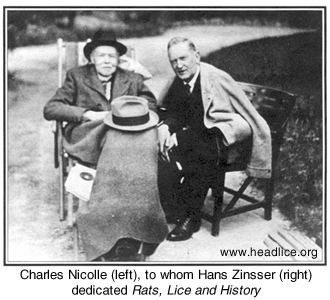
The unambiguous assertion of such a man that head lice could transmit disease arose from his clear understanding of the research in this area. In 1928 the French physician and bacteriologist Charles Nicolle, to whom Zinsser dedicated Rats, Lice and History, was awarded the Nobel Prize for Medicine for demonstrating that lice transmitted typhus. The citation made specific mention of “the successful transmission of exanthematous typhus fever to chimpanzees in the acute stages by the injection of a small amount of the body louse.” Because Nicolle was not the first to demonstrate that insects could transmit human disease (Ronald Ross discovered this in his study of malaria in 1897), the decision to award Nicolle the Nobel Prize was controversial: as H.W. Wilson’s standard Nobel Prize Winners notes, his discovery “involved no new principles.” What it did involve was a major medical application: Nicolle’s revelation about lice and typhus (which he published in 1909) was of enormous value in preventing outbreaks of the disease during World War 1.1 This boon enabled the Nobel Committee to justify their decision on the grounds that Nicolle’s discovery had, in the words of Alfred Nobel, “conferred the greatest benefit on mankind.”
The louse that Nicolle implicated in typhus transmission was the body louse, for Nicolle had discovered that typhus patients ceased to be infectious after they had been admitted to hospitals, where they were washed, shaved and given clean clothing. Nicolle concluded: “The contagious agent was therefore something attached to [their] skin and clothing, something which soap and water could remove. It could only be the louse.”
Soon after the publication of this paper two American researchers for the U.S. Public Health and Marine-Hospital service investigated the possibilities of disease transmission by the head louse. In their 1912 article, Joseph Goldberger and John F. Anderson demonstrated “the first evidence incriminating any insect other than the body louse as an intermediary in the transmission of typhus fever.”2 Head lice were successfully infected with typhus, which was then transmitted to a laboratory monkey by subcutaneous injection of crushed insects.
In 1916 the German investigator H. Toepfer reported finding the typhus parasite in head lice of typhus patients.3 He was also able to infect head lice by placing them upon typhus patients. “Smears from lice fed on typhus blood contained [the] organism.” R. Hanser (1916) confirmed Toepfer’s finding.4
The following year George Henry Falkner Nuttal, who has been called the “Father of Parasitology,” summarized the role played by Pediculus humanus (human lice), in the etiology of both typhus and relapsing fever. He stated that “P. humanus (corporis [body] and capitis [head]) had been shown to be the carrier of two important diseases affecting man, namely typhus and relapsing fever.”
In a 1920 review paper Nicolle himself stated that “the head louse transmits typhus like the body louse.” Similarly, Patrick Buxton, in his standard study, The Louse (1939), notes that “while most experimental work done on typhus has used body lice, it is known that head lice are capable of acquiring the infection and transmitting it.”5
Jack Snyder, witnessed the human suffering of typhus on the medical front lines as far away as Egypt, and worked to develop improved methods for field isolation of the disease’s causative agent, Rickettsia prowazekii. Dr. Snyder also worked beside Zinsser in the lab and later wrote in his chapter on Typhus in Viral and Rickettsial Infections of Man (1965) that “classic epidemic typhus is a disease which occurs as a natural infection of man, the human body louse–and the human head louse.”6 He went on to note that “the course of typhus infection in the human head louse is identical to that of the body louse.”
As recently as 1975 E.S. Murray and S.B. Torrey of the Harvard School of Public Health confirmed that head lice could be readily infected with virulent rickettsia by feeding upon infected animals.7 The rickettsiae multiplied abundantly in the louse’s gut, leading to heavy fecal shedding and the death of the insect.
Despite the evidence provided by these and other studies, and despite Zinsser’s statement in Rats, Lice and History, (continuously in print since its publication in 1935), the prevailing medical view today is that the ubiquitous head louse cannot transmit disease.8 Modern reference works repeat this claim without citation. No trials were found in the nearly eight decades since Goldberger and Anderson’s demonstration that refute or even challenge any of the earlier investigators’ conclusions.
Why, then has the head louse been exonerated? How has the medical community arrived at a view that so completely disregards repeatedly confirmed evidence of the head louse’s ability to transmit serious disease?
Historically, the head louse has been perceived as incidental to the body louse. The most extensive research on lice was conducted when epidemic typhus threatened public health, a time when the body louse was far more prevalent than it is today. Although the head louse and body louse are closely related parasites, it was the body louse that served as the primary vector for typhus, and the epidemiologically unimportant head louse was rightfully assigned a low priority. Eventually, typhus was brought under control and the incidence of body lice diminished through improved hygiene and sanitation. In the years that followed, research on lice behavior was largely restricted to studies for the development of pediculicide treatments.
Subsequent reports, however, indicate that the head louse has become the more prevalent parasite in some of these endemic typhus locations. Murray and Torrey (1975) note “the greater prevalence of head lice over body lice is now becoming noticeable in traditional endemic typhus areas of Eastern and Southeastern Europe, such as Bosnia, Yugoslavia.”7 Weyer (1978) suggests that the control of lice should not be neglected. “We have to remember that the number of persons infested with lice has been steadily increasing for more than 20 years, especially in highly developed countries. Although these ‘lice of affluence’ chiefly involve head lice, we have to bear in mind that head lice are also able to become infected with, and transmit R. prowazekii [infectious agent of typhus], and Borrelia recurrentis [infectious agent of relapsing fever].”9
This discussion earlier mentioned the reports of scientists whose research encompassed field work, clinical observation, and laboratory investigations of epidemic typhus. Each undoubtedly appreciated the importance of the body louse, but did not ignore the head louse and its capability to transmit the disease. Nicolle’s Nobel-winning work (1909) incriminated the body louse without mentioning the head louse. It was his later summary and review papers (1920) which acknowledged that “the head louse was able to transmit typhus just as the body louse.”10 Nicolle’s papers were published in French, and while his 1909 paper was well-known and widely influential, the 1920 paper remained obscure and seldom referenced in publications of later researchers.
However, Nicolle’s omission of the head louse did not imply exoneration, for the 1909 paper reported no comparative trials with head lice. In fact, no original trials on the head louse were available before Anderson and Goldberger’s work in 1912.
Gerald F. Slonka (1975), in his paper “Epidemiology of Pediculosis Capitis,” refers to the role of the head louse in transmission of louse-borne diseases as “controversial,” but states that both laboratory and field studies support a reasonable concern that the head louse might transmit disease.11 Slonka references the work of eight others who warn of the potential hazard for disease transmission by head lice, and concludes with Gaon (1973) who believed that “importance must be attached to head lice as a vector of louse-borne diseases as body lice disappear.”12
In the same year that Slonka published his paper, Murray and Torrey published original research “demonstrating the ability of the head louse to be readily infected with R. prowazekii and disseminate virulent R. prowazekii organisms in their feces.” Slonka was thorough in his examinations, but it was Murray and Torrey who performed the most definitive trials available in the literature.
Murray and Torrey’s research was published in the Annals of the New York Academy of Sciences. A search of the Science Citation Index reveals that the paper has been cited only twice since its publication in 1975–once by Weyer (1978) who describes its conclusion as “a fact re-confirmed experimentally,” and once by Altschuler and Kenney (1986).13
Sholdt, Holloway and Fronk’s book (1979), The Epidemiology of Human Pediculosis in Ethiopia, provides 150 pages of the most recent and extensive information obtained for both head and body lice. Their study acknowledges the body louse as having been the one associated with major epidemics in the past, but notes that in the laboratory, the causal organisms for typhus and relapsing fever have been shown to reproduce in both the head and body louse.14
Nevertheless, many contemporary publications deny the head louse’s potential for transmitting disease. Simon (1991) states unequivocally that “unlike the body and pubic louse, the head louse does not transmit bacteria or viruses,”15 while Elgart (1990) claims that “the body louse, which exactly resembles the head louse, is the only one that can transmit the disease.”16 It is notable that some articles are restricted to statements that head lice are not known to have transmitted the disease (Juraneck 1976, Kim 1986)17;18, while others insist that the head louse cannot transmit disease (Drug Topics 1983, Sanford-Driscoll 1987, Carson 1988, Elgart 1990, Simon 1991).15;16;19;20
Zinsser’s assertion that head lice could transmit typhus represents a consensus that has stood for 80 years among experts. Opposition appears without documentation and goes beyond acceptable differences of opinion. In his 1924 address entitled “Medicine and the Community,” Zinsser insisted that “we must keep our minds open, appraise whatever is advanced and, before utterly condemning, make sure that there is not, within the rank and wild growth of the….weed, a sound twig which [may be] of some value if properly pruned.”
REFERENCES
- Nicolle CM: Recherches expérimentales sur le Typhus exanthématique. Annales de L’Institute Pasteur 1909; 24:243-275.
- Goldberger J, Anderson JF: The transmission of typhus fever, with especial reference to transmission by the head louse. Public Health Reports 1912; 27:297-307.
- Toepfer H: Der Fleckfiebererreger in der Laus. Deutsche Medicinische Wochenschrift 1916; 41:1251-1255.
- Strong RP, Shattuck GC, Zinsser H, et al. Typhus Fever With Particular Reference to the Serbian Epidemic. Cambridge, MA: Harvard University Press, 1920.
- Buxton PA: The Louse: An Account of the Lice Which Infest Man, Their Medical Importance, and Control. London, England: Edward Arnold & Co., 1939.
- Snyder JC: The Typhus Fevers. Viral and Rickettsial Infestations of Man 1965; 470-471.
- Murray ES, Torrey SB: Virulence of Rickettsia Prowazekii for Head Lice. Annals N.Y. Academy of Sciences 1975; 25-34.
- Zinsser H: Rats, Lice, and History. Boston, MA: Little, Brown, & Co., 1935.
- Weyer F: Progresses in Ecology and Epidemiology of Rickettsioses. Acta Tropica 1978; 35:5-21.
- Nicolle CM: Etat de nos connaissances experimentales sur le Typhus Exanthematique; Bulletin de Institut Pasteur, 1920.
- Slonka GF: Epidemiology of Pediculosis Capitis. Bulletin of the Society of Vector Ecologists 1975; 2:16-19.
- Gaon, JA, Louse eradication programs in Yugoslavia. Proceedings of International Symposium on the Control of Lice and Louse-borne diseases, PAHO, Sci. 263:32.
- Altschuler DZ, Kenney LR: Pediculicide Performance, Profit, and the Public Health. Arch Dermatol 1986; 122:259-61.
- Sholdt, ll, Holloway ML, et al, Epidemiology of human pediculosis in Ethiopia, Jacksonville Fla, Navy Disease Vector Ecology and Control Center, 1979, p2.
- Simon, G: California School Health Newsletter, Spring 1991.
- Elgart ML: Pediculosis. Dermatol Clin Apr 1990; 219-28.
- Juraneck, D: The nuisance diseases: Pediculosis and scabies, American Practitioners for Infection Control 1976; 4:1.
- Kim KC, Pratt HD, Stojanovich CJ: The Sucking Lice of North America Pennsylvania State University Press, 1986.
- Sanford-Driscoll M: Pharmacotherapy of Head Lice in Children: An Update. Pediatric Pharmacology 1987; Vol.1 #5: 284-7.
- Carson DS, Tribble PW, Weart LW: Pyrethrins Combined With Piperonyl Butoxide (RID) vs. 1% Permethrin (NIX) in the Treatment of Head Lice. AJDC Jul. 1988; 142:768-9.